- Researchers from the center’s six research lines met to share their work, build synergies, and advance ties with the productive sector.
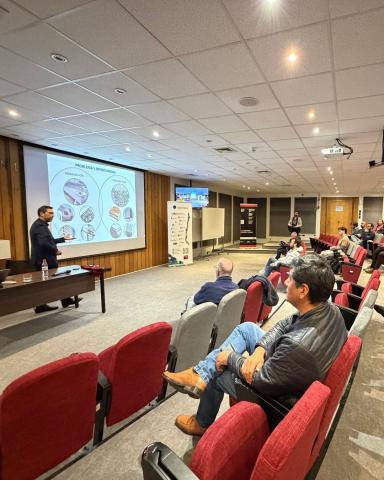
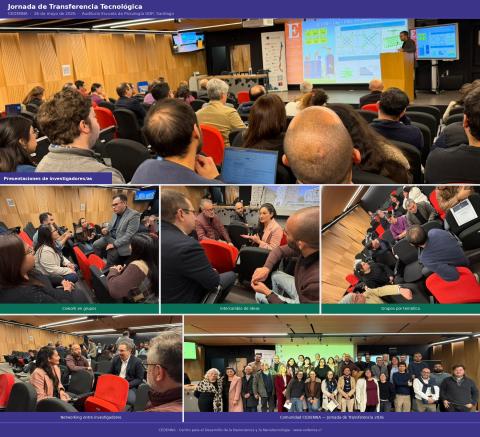
On Tuesday, May 26, the Center for Nanoscience and Nanotechnology (CEDENNA) held its first Technology Transfer Day 2026, an event that brought together researchers from every line of the center with the aim of showcasing their scientific work and exploring concrete opportunities for transfer to the productive sector.
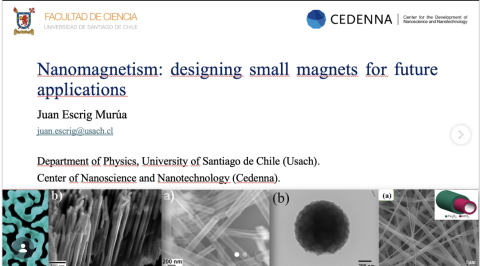
The event, held in the Auditorium of Universidad Diego Portales’ School of Psychology, featured nine presentations covering everything from post-harvest fungicide detection systems for fruit to biomedical implants based on Chilean natural resources, as well as new battery materials, nanopesticides, biosensors for neurodegenerative diseases, and developments in food packaging and safety. The event drew more than 40 in-person participants, with simultaneous Zoom streaming for researchers based in other regions.
Synergies that go beyond individual research lines
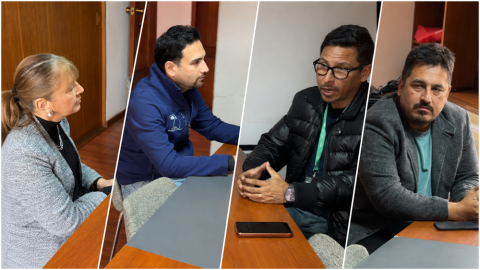
The highlight of the day was the collaborative work session, where participants grouped by topic and discussed the work presented. That exchange sparked valuable connections between teams from different lines within the center, opening up possibilities for joint collaboration.
CEDENNA’s director, Dr. Dora Altbir, praised the significance of the event and noted that technology transfer has become a strategic priority for the center, adding that gatherings like this one – where researchers themselves present their progress and connect with one another – are essential to speeding the path from frontier research to real impact on society and industry.
CEDENNA brings together 57 researchers from 18 universities across the country working on frontier science in nanoscience and nanotechnology. Its six research lines (computational simulations, magnetic nanostructures and mining, renewable energy, chemistry and the nano-environment, nanobiomedicine, and food packaging and safety) share the potential to generate developments with direct applications in mining, health, agriculture, energy, and the food industry.
Nanosafety: a responsibility Chile carries on the world stage
A cornerstone that runs through all of CEDENNA’s work is its Nanosafety Unit. The center operates the only laboratory in Latin America accredited under the ISO 17025 standard for nanomaterial toxicity analysis, an international benchmark that guarantees the quality and reliability of its results.
This capability, unique in the region, is not merely a technical achievement: it positions Chile as a country with a voice in shaping global regulations on nanomaterials. CEDENNA is the only Latin American representative on the OECD Working Party on Manufactured Nanomaterials (WPMN), the international body that sets the standards directly affecting exports and industries across all member countries.
At a time when the government has made technology transfer and science-industry collaboration priorities on its agenda, nanosafety also represents a public policy opportunity: Chile is the only country in the region with the technical capacity in place to support a National Nanosafety Policy, and CEDENNA is positioned to be the institution behind it.
About CEDENNA
CEDENNA is an Applied Research center funded by Chile’s National Research and Development Agency (ANID), whose mission is to carry out frontier research in nanoscience and nanotechnology and transfer that knowledge to Chilean society and industry. With 16 years of history, the center has trained more than 900 professionals, published close to 1,900 Web of Science articles, and filed more than 65 patents in Chile and abroad.
More information at www.cedenna.cl