

Largest research center at the nano scale
What is CEDENNA
Founded in 2009, the Center for Nanoscience and Nanotechnology (CEDENNA) is a multidisciplinary and inter-university center that brings together specialists in physics, chemistry, engineering, biotechnology, and health sciences. Its purpose is to generate excellence in knowledge and transform it into solutions that address scientific, productive, environmental, and social challenges from a collaborative and frontier perspective.
In 2025, CEDENNA was once again awarded the designation of Basal Center by the National Agency for Research and Development (ANID), under the academic leadership of Diego Portales University (UDP), the host institution. Participating as associate universities are the University of Santiago, Chile (USACH), the University of Chile, Federico Santa María Technical University (USM), the University of Tarapacá (UTA), and the University of Talca (UTalca).
The Center is composed of more than 50 researchers organized into six research lines: Modeling and Simulations, Sensors and Mining, Chemistry and Environment, Energy, Biomedicine, and Packaging and Food Safety. Its more than 17 specialized laboratories allow for the development, manufacturing, prototyping, and characterization of nanomaterials through advanced chemical, physical, and biological capabilities.
A cross-cutting capability: nanosafety
CEDENNA has a Nanosafety Unit (UNS) aimed at promoting the responsible development and application of nanotechnology. This unit performs toxicity assessments on nanomaterials, promotes safe practices, and supports companies, institutions, and public agencies in matters related to regulation, risk prevention, and the protection of people and the environment.
Nanosafety is a cross-cutting component of the Center's work and accompanies the various stages of research, development, validation, and technology transfer.
Along with its scientific work, CEDENNA maintains a firm commitment to the training of advanced human capital and the social appropriation of knowledge. To this end, it develops courses, workshops, educational programs, and alliances with institutions such as the Medical College of Chile, the Chemistry Teachers Network, and the Chilean Society of Physics Education.
The Center also drives the development, prototyping, and transfer of solutions based on nanoscience and nanotechnology, linking with companies, public institutions, and other social actors. Its specialized technological capabilities, projects, and services contribute to the country's sustainable development and the strengthening of innovation based on scientific knowledge.
-
Multidisciplinary Team
We have more than 70 PhD specialists in physics, chemistry, biology, and engineering.
-
Academic Network
Collaboration with 17 universities of national and international prestige.
1.000.000.000
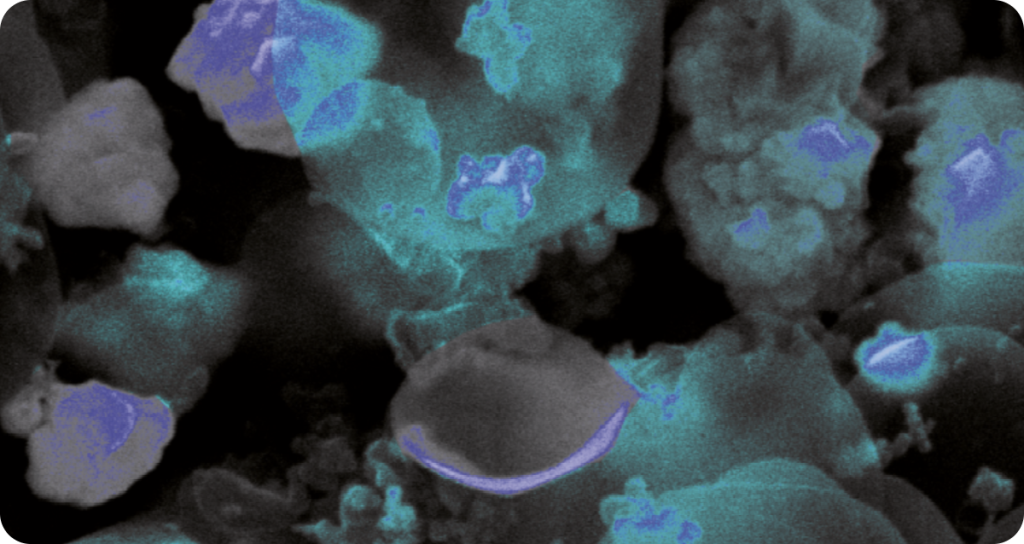
A nanometer is one-billionth of a meter.
When we work at this scale, some materials can behave differently and acquire new properties. Nanoscience studies these phenomena and nanotechnology uses them to create materials, sensors, and solutions applied to health, mining, energy, food, and the environment.